.svg)


Your e-commerce business is exploding. With every new order, you feel that thrill of success. But as your product flies off the shelves and you gear up to restock, you'll need someplace to store it all.
The traditional warehousing model can feel limiting for a dynamic e-commerce brand. What if there was a way to scale your storage alongside your sales, without the pressure of long-term contracts? Welcome to a new era in warehousing, where flexibility is a perk and your competitive edge.
Choosing between conventional and flexible warehousing protects your cash flow and supports your growth. U.S. retail e-commerce sales hit $326.7 billion in Q1 2026, up 9.8% from 2025. With that kind of upward trend, you can see how your selected warehousing model makes a difference.
What Is Traditional Warehouse Space?
Traditional warehouse space is the long-standing model most businesses think of when they need storage. You sign a multiyear lease for a private warehouse, and that space becomes yours for the duration of your lease.
Characteristics of a Traditional Lease
These agreements share core characteristics that shape your financial commitment and operational flexibility.
- Long-term commitment: Usually 3 to 10 years.
- Fixed space allocation: You commit to a specific square footage up front, whether you use it all or not.
- Bare-bones coverage: The lease covers the physical building, but everything else is your responsibility.
Commercial leases operate with minimal regulation. Unlike residential leases, traditional warehouse agreements are complex contracts with very few safeguards.
The Hidden Risks for Small Businesses
Traditional leases create specific risks for growing businesses with limited capital reserves.
- Personal guaranty exposure: This clause bypasses the protection your LLC or corporation typically provides, possibly jeopardizing your personal assets. The landlord can pursue your home, savings and other personal property to cover the debt.
- Variable cost responsibility: You're typically responsible for maintenance, security, utilities and other fluctuating expenses that make budgeting unpredictable.
These costs can disrupt your financial planning when you need stability most.
What Is Flex Warehouse Space?
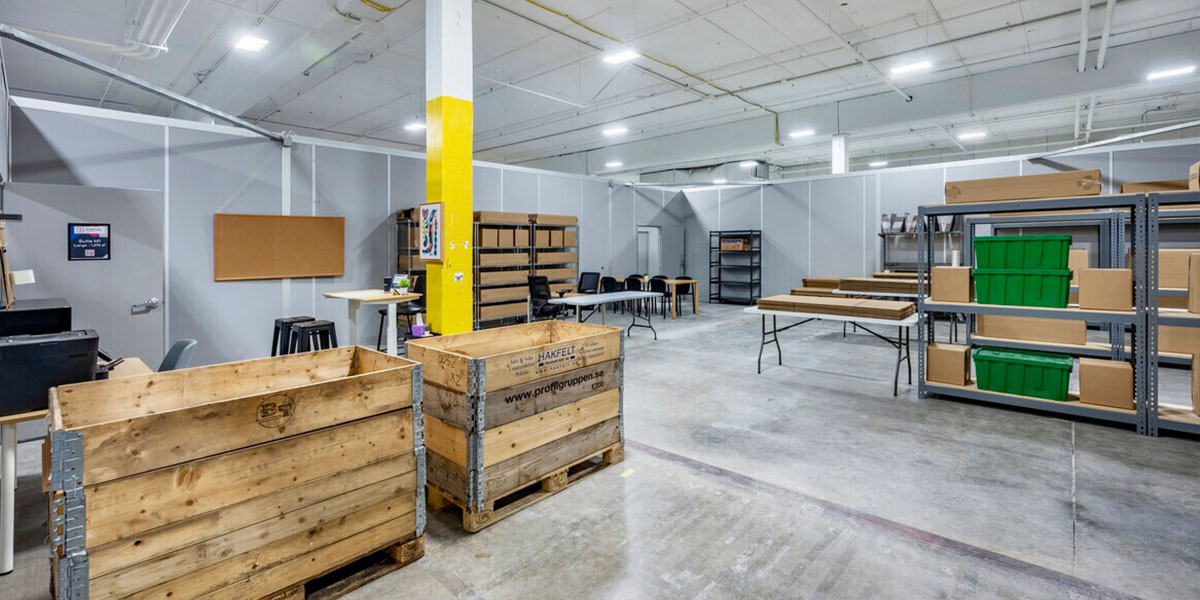
Flex or flexible warehousing is a modern alternative that's changing how growing businesses think about space. Instead of locking into years of fixed square footage, you access warehouse capacity and amenities on demand with a complete infrastructure built to support your growth.
Features of the Flexible Model
Flexible warehousing focuses on adaptability, moving away from traditional long-term commitments.
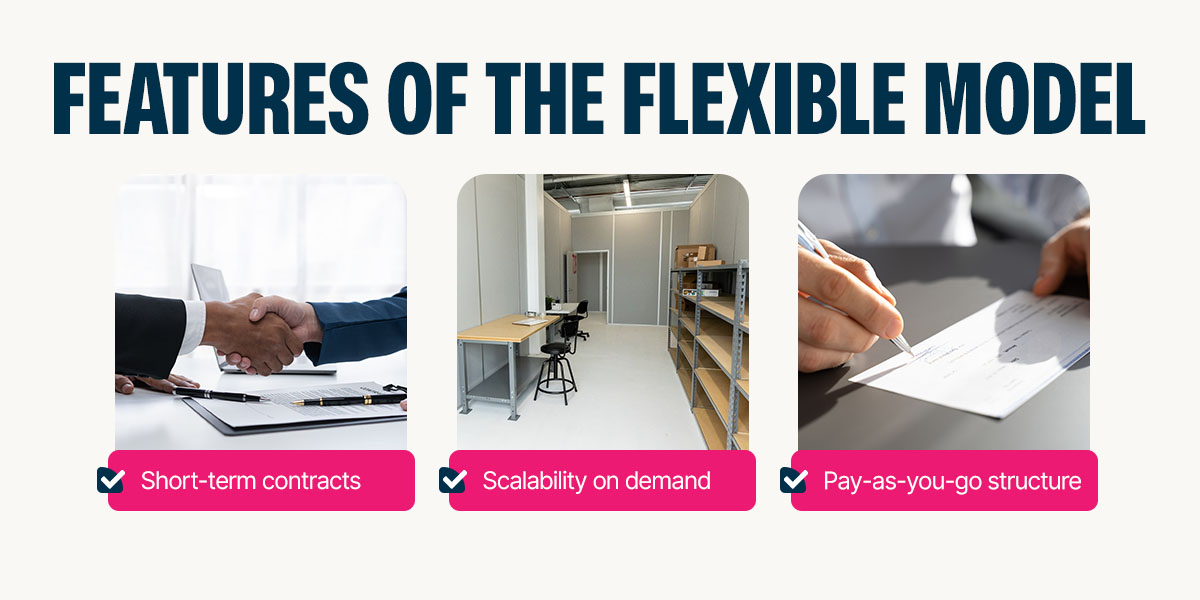
- Short-term contracts: Sign up for a few months or go month-to-month, giving you freedom to adjust as conditions evolve.
- Scalability on demand: Scale your space up or down as needs change, with a range of warehouse sizes available.
- Pay-as-you-go structure: Flexible warehousing empowers businesses to adapt to market demands and seasonal fluctuations without long-term commitments.
Primary Benefits for Growing Brands
Beyond renting a space for your business, you have operational support.
- Utilities and Wi-Fi: All-inclusive service agreements bundle these benefits, so you don't have to coordinate with multiple vendors.
- On-site logistics: On-site staff manages shipping, receiving and handling for you, with daily scheduled pickups from national carriers.
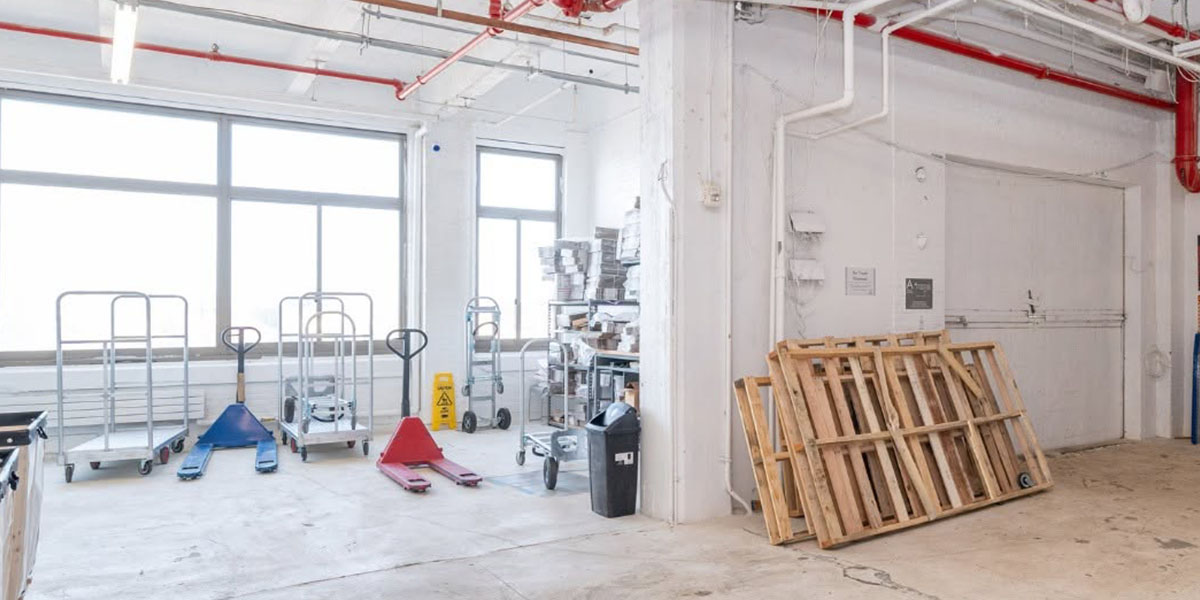
- Shared equipment access: Forklifts, pallet jacks and other essentials are available when you need them.
- Technology solutions: Access to warehouse management systems, order management systems and analytics platforms that help you track inventory and optimize operations.
- Discounted shipping rates: Many flexible providers offer preferential rates within their network, passing savings directly to you.
A community often springs up among members of flexible spaces. You work alongside other entrepreneurs and business owners facing similar challenges. That network becomes a resource for advice, partnerships and even referrals.
Traditional vs. Flexible Warehouse Space — A Side-by-Side Comparison
Studies show how traditional and flexible warehousing stack up, especially in how well they help businesses stay agile. Here's a detailed comparison that shows why the warehouse vs. flex space decision depends on your current and future goals.
Traditional vs. Flexible Warehouse Space Cost
The cost difference between traditional and flexible warehouse space is one of the most critical factors in your decision. At first glance, traditional leases might look cheaper. But the total cost tells a different story.
Calculating the Total Cost of a Traditional Lease
When you're evaluating a traditional lease, the advertised rent is only part of your actual monthly expense. All costs below are variable. A property tax hike or unexpected repair can blow your monthly budget.
- Common area maintenance fees: Your portion of maintaining shared spaces.
- Property taxes: Landlords often pass these on to their tenants.
- Insurance: You're responsible for coverage.
- Utilities: Electric, water, heating and cooling costs fluctuate monthly.
- Security: Cameras, access systems and monitoring services cost to install and maintain.
- Repairs and maintenance: Unexpected fixes come out of your pocket.
The Value of an All-Inclusive Bill
The flexible warehouse model bundles all variable costs into a single, fixed, predictable monthly payment. You don't have to guess what you're paying, which simplifies financial planning.
With predictable costs handled, you can focus on growing your business.
Lease Flexibility — Short-Term vs. Long-Term
Lease length significantly shapes your business's ability to respond to new opportunities and quickly adapt to market changes.
The Strategic Advantage of Agility
Short-term leases let you seize opportunities and stay ahead. Need to scale up for the holiday rush? You can add space when you need it. Exploring a brand-new market? Secure temporary storage without betting on the long haul. Plus, when a big inventory shipment arrives, expanding your storage footprint is fast and simple.
Industry analysts project the e-commerce warehousing market will grow at a 5.44% compound annual growth rate. Flexible warehousing infrastructure gives you the agility to move with the market.
De-Risking Your Operations
Long-term leases create major financial risk when market downturns, supply chain disruptions or strategy shifts leave you trapped in expensive space you no longer need. Unexpected events, such as tariff changes, can significantly impact your operations.
The flexible model reduces that risk. You pay only for the capacity you actually use.
Which Warehouse Type Is Right for Your Business?
Your choice depends on where your business is today and where you want it to be tomorrow. Here are two profiles to help you decide.
Traditional Warehousing
Traditional warehouse space often works best for big, established companies that have steady and predictable stock levels. A long-term lease might save you money if you're a manufacturer or distributor handling large amounts of product without many ups and downs and you've got the finances to cover initial setup costs and changing expenses.
Flexible Warehousing
Flexible warehousing is the ideal fit for growing e-commerce brands, startups with seasonal demand or small to midsized businesses that value versatility and budget stability. When you're dealing with common inventory-tracking challenges, these modern, tech-backed services can be invaluable.
A small business warehouse model that adapts to your needs gives you room to grow without overcommitting. Portal Warehousing serves this exact audience with solutions designed for businesses at your stage.
Questions to Ask Before Choosing
Before you commit to a warehousing model, ask yourself these five questions to narrow down what matters to your business.
- How much do I realistically expect to grow in the next one to two years?
- What is the true total monthly cost, including all fees and variable expenses?
- What are the penalties for ending my lease early if my situation changes?
- What technology or logistics services are part of the agreement?
- How much space do I need right now, and how might that change?
Find Your Competitive Edge With Portal Warehousing
Flexible warehousing is a strategic tool that lets growing businesses move fast, scale smart and stay nimble. Portal Warehousing brings the model to life with move-in-ready spaces, all-inclusive monthly billing and flexible lease terms designed for your stage. Access warehouse space, coworking areas, logistics support and a community of fellow entrepreneurs, all without the risk of a long-term commitment.
Portal Warehousing is your launchpad for the next phase of your business's growth. Ready to see how it all works? Book a tour at a Portal location near you. Or if you're ready to make the move, join Portal today and explore a smarter way to grow.